
The Lock That Never Needs a Battery: Why Battery-Free Is the Future of Access Control

Imagine a lock that never dies. No low-battery warnings at 2 a.m. No service trucks rolling out to swap cells across hundreds of lockers. No deadlocks, no downtime, no e-waste. That isn't a concept from a tech keynote — it's here today. Meet the battery-free lock from Kerongtech, powered entirely by the device you already carry in your pocket: your smartphone.

The Hidden Cost of "Smart" Locks
Battery-powered smart locks promised convenience, but quietly introduced a whole new category of problems:
Endless maintenance cycles. Every battery eventually dies. In a facility with 500 lockers — a gym, a school, an office, a logistics hub — someone has to track, schedule, and perform hundreds of battery replacements every year.
Unpredictable failures. Temperature swings, humidity, and battery aging mean failures rarely happen on schedule. A dead lock during peak hours isn't an inconvenience; it's lost revenue and frustrated users.
Environmental burden. Millions of lock batteries end up in landfills annually. For organizations with sustainability commitments, that's a hard number to defend.
Compliance headaches. In industries like oil, gas, mining, and aviation, lithium batteries are restricted or outright prohibited in many areas — making conventional smart locks a non-starter.
The fundamental question: why should a lock need a power source at all, when every user arrives carrying one?
How Kerongtech's Battery-Free Lock Works
Kerongtech's battery-free NFC smart lock elegantly sidesteps the entire battery problem through NFC energy harvesting. Here's the magic in two steps:
1. Harvesting energy. When you bring an NFC-enabled smartphone (or NFC card) close to the lock, the phone's RF field induces a current in the lock's internal coil — the same electromagnetic induction principle that powers a transformer. The harvested energy is captured and conditioned by onboard capacitors into stable power for the lock's circuitry.
2. Authenticating and actuating. Over the same NFC connection, your digital credential is transmitted and verified with encrypted authentication. Only then does the control circuit drive the actuator to open — all within a fraction of a second, using power generated in the moment of the tap itself.
No batteries. No wiring. No charging. The lock draws less than a sip of your phone's battery — energy-wise, it's like sending a single text message.
Why Organizations Are Making the Switch
Zero Maintenance, Zero Downtime
The most compelling ROI story in access control is subtraction. Remove batteries, and you remove battery checks, battery budgets, battery logistics, and battery failures. Install the lock, and it works — today, next year, and a decade from now.
Security by Design
Each unlocking event is a fresh, encrypted session. Credentials can be issued, time-limited, and revoked remotely through Kerongtech's management platform. Lost phone? Revoke access in seconds without rekeying a single lock. Temporary access for contractors or deliveries? Set an expiry and forget it.
Sustainable by Default
A battery-free lock is e-waste-free by design. There's no lithium to mine, no cell to manufacture, ship, replace, and dispose of. For ESG-conscious businesses, every Kerongtech lock installed is a measurable, reportable reduction in environmental impact.
Built for Demanding Environments
Kerongtech's battery-free locks are engineered for real-world use — gyms and swimming pools with constant humidity, schools with relentless daily cycles, offices, warehouses, and industrial sites where reliability isn't negotiable.
Use Cases Where Battery-Free Wins
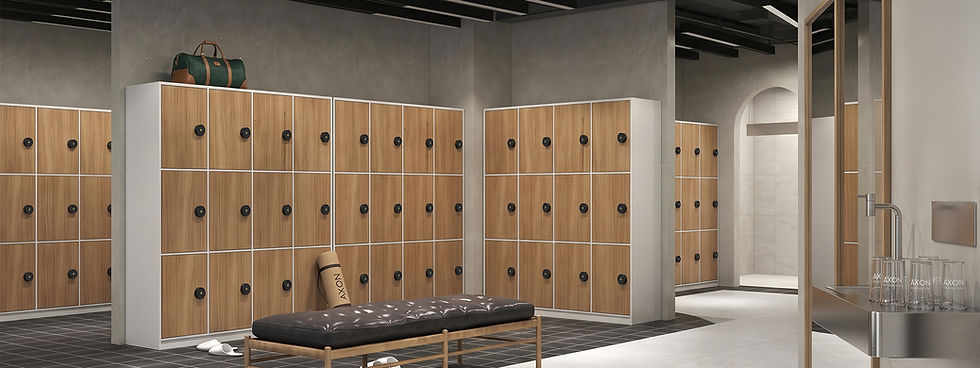
Fitness & aquatic centers: Locker rooms are brutal on batteries. Battery-free locks shrug off moisture and thousands of daily cycles.
Schools & universities: Student turnover is constant; credential management is effortless, and maintenance budgets go further.
Corporate offices: Hot-desking, shared storage, and visitor access — all managed from a central dashboard.
Logistics & industrial: Restricted-lithium environments and remote sites where a service visit costs more than the lock itself.
The industry spent years making locks "smarter" by adding batteries, Bluetooth radios, and Wi-Fi hubs. Kerongtech asked a better question: what if the lock didn't need any of that? The result is an access control solution that is simpler, greener, more secure, and dramatically cheaper to own over its lifetime.
Your phone is the key. Your tap is the power. And the battery — permanently — is history.
Ready to eliminate battery maintenance from your operations? [Visit Kerongtech to explore the battery-free lock series] and request a quote for your facility today.


Comments